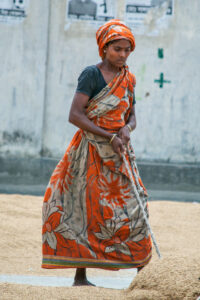
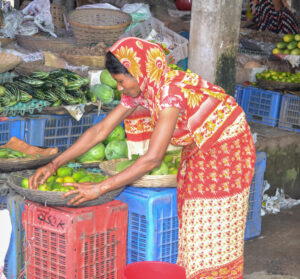
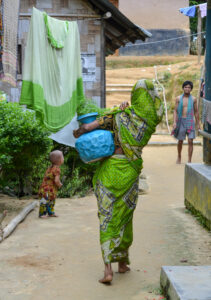
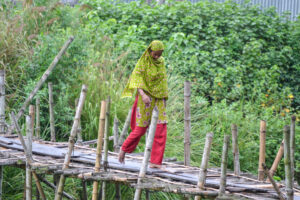
Almost all of the women we met were dressed in beautiful, elegant saris. The women at the school wore modern 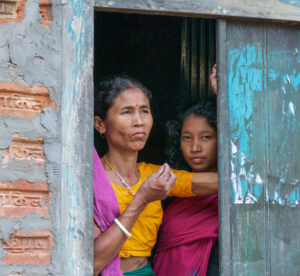 versions of traditional dress. Those out in the countryside or on the streets of Dhaka and Chittagong looked as if they had been worn for many years. Regardless of whether the women were in the office, working in the fields, shopping in the markets, working in rice fields or tea plantations, or walking through the villages, the colors of the cloth were
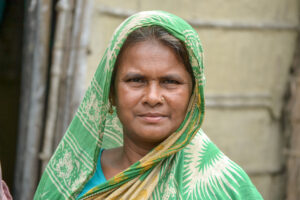 stunning and stood out against the rural landscape.
Traditional dress for men and women holds immense cultural significance in Bangladesh. The fabric choice, colors, and patterns all symbolize identity and tradition. The fabrics were once woven in Dhaka and sold worldwide. British colonialization had a tremendous negative impact on traditional weaving. The British imposed heavy taxes on local weavers; the handloom industry faced cheaper British textiles; the British established a 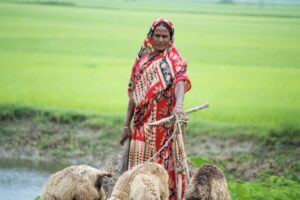 monopoly over raw materials, limiting access for many; and the introduction of machine-made fabrics all led to the loss of traditional craftsmanship. As in the colonies around the world, local cultures were diminished or destroyed for the profit of the colonizers.
Now, hand-woven cloth is still available but only for the wealthy.