Bangladesh – who goes to Bangladesh except relief workers and Peace Corps Volunteers? Actually, the Peace Corps suspended its program in 2006. Fearing the possibility of volunteers being targeted by Islamic extremists, they brought them all home. Yet, we are headed there to spend almost two weeks working with the Asian Women’s University in Chittagong. The University, partially funded by the Gates Foundation, is a ray of hope in an otherwise desperate country. They find promising Asian women from countries such as Afghanistan, India, Vietnam, and Bhutan and send them to Chittagong for 4 years of college.
Bangladesh and Haiti have been tied for many decades as the world’s poorest and most disaster-prone countries. One climbs to second place only to have a cyclone or an earthquake strike, knocking it back to the bottom again.
 I remember years ago, an enlightened Colorado politician said something like the following in an interview with Dick Cavett, where he announced his retirement from politics, “Nobody wants to hear politicians tell the truth. I mean, really, what kind of future is possible for a country like Bangladesh other than poverty and remaining on foreign aid forever? You just can’t say that when you are running for office.” He never ran for office again. I bet he is an organic farmer growing weed in California now.
Once part of India, what is now Pakistan and Bangladesh became one country after WWII, separated geographically by India. East Pakistan broke away from West Pakistan in the 70’s over cultural and language differences, becoming Bangladesh. West Pakistan became Pakistan. Today, Bangladesh is one of the 8th most populated country in the world and among the most densely populated. According to National Geographic, the 164 million-plus people are mathematically incapable of being truly alone, given the country’s size. While we have been cautioned by our hosts about this unfathomable population density, I doubt we are prepared for what we are about to drop into.
Neither can one prepare oneself for poverty. I remember feeling like a seasoned traveler when I left the Peace Corps and spent 6 weeks traveling in India. Yet I was completely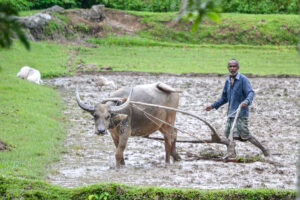 overwhelmed and shocked by the poverty, and that was 25 years ago. I remember not even being able to react; the sheer number of homeless and destitute people was too much to comprehend. With climate change looming, Bangladesh’s future grows even darker. The two cities predicted to be hardest hit by rising sea waters are Chittagong and Dhaka, both in Bangladesh. Thousands of people arrive in Dhaka daily, fleeing the rising waters and seasonal flooding. The government itself is planning for mass ex immigration, yet its mighty neighbor to the west is building a fence along the border as fast as possible. Sounds familiar, doesn’t it?
We will arrive in the capital city, Dhaka, tonight. For the next three days, we will be touring the tea area to the northeast of the city. While in Chittagong, we hope to visit the Hill Tracts, an area on the State Department’s list of areas unsafe to travel. (So was the northeast coast of Borneo, and we were just fine there.) Of course, it is the monsoon season. Our hosts have warned us about that, too. Our suitcases are full of wicking, fast-drying clothing,  and we are wearing those god-ugly Keen “walk through rivers of water” shoes. Our veins are coursing with Mefloquine, and we are vaccinated against most everything, including adult polio. We were warned not to touch any stray dogs and not to let a drop of non-bottled water touch our lips (aside from nasty bacteria, the groundwater is full of arsenic). Last year, the University had to deal with an outbreak of Dengue fever.